Backstage
2026 — We're Back
Sunics went dark a few years ago. The technology worked — but finding a market that made the investment worthwhile proved harder than building the thing itself. A classic lean startup lesson: a good solution in search of a problem. We pulled the plug. No regrets.
Then came a visit to the Synth Temple , organised by AES Melbourne in June 2026.
Looking at 175+ vintage synths ready to create a massive set of sounds, something clicked. Imagine the visual counterpart of the palette of sounds a place like the Temple can produce ! Imagine globally !! Keeping Sunics buried in paper felt like a waste. We’re back where we started — curious, and wanting to play, experiment, and share.
Thanks to AI-assisted software development, what used to be a steep time investment is no longer an obstacle. Doors that were closed are now open.
Same idea, same maths, new moment. Let’s see what sound looks like.
What we are trying to do
The Fourier transform has been the dominant framework for signal analysis since 1822. It is extraordinarily powerful. But it answers one specific question: which frequencies are present? There are other questions — about waveform shape, cycle-to-cycle variation, timbre evolution — that Fourier is not designed to answer.
We are not trying to replace Fourier. We are trying to add a new lens. Cyclograms provide a complementary view of a signal that reveals structure invisible to spectral approaches. We believe that has value in audio, medicine, engineering, and anywhere else periodic signals carry information.
Sunics is open research. We publish what we find, share what we build, and welcome collaboration with anyone who wants to explore this space.
The People
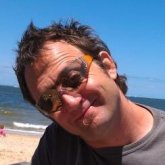
Diego Tognola - Founder & Chief Scientist
Born and raised in Switzerland, Diego studied Mathematics, Physics and Computer Science at the University of Zurich, earning a Doctorate in Dynamical Systems (“Chaos Theory”) at the Swiss Federal Institute of Technology (ETHZ).
A passion for synthesisers since the early 1980s led to an increasing interest in how timbres could be visualised more intuitively. While travelling through the Australian Outback, he conceived the mathematical idea that became Sunics.
Diego changed his career to software engineering, gaining end-to-end delivery experience of digital products across two decades. Those skills became the bridge between sound, maths and software. When he finally applied the transformation for the first time — to a whale song — the result was immediately intuitive. The maths worked.
He founded Sunics as an experimentation platform for the audio and research community — so that anyone interested can collaboratively explore how we look (pun intended) at sound.
A Brief History
1998 — Original mathematical idea for a way to visualise sound conceived
2001 — First proof-of-concept
2006 — Australian patent application 2006272451 filed
2006 — Technology presented at VANZ 2006
2007 — Australian Government awards COMET grant
2008 — Real-time monitoring app for AliveTech Bluetooth ECG monitor
2010 — Successful prototype for audio-based racecourse track rating
2011 — Australian patent accepted
2012 — US Patent 8,089,349 granted by the US Patent and Trademark Office
2015 — License negotiations with Swiss ECG device manufacturer Schiller
2016 — Re-focus on audio engineering
2018 — Sunics put to sleep - lean enterprise lesson learnt
2026 — Sunics is back in play mode - not for money but for fun.